Fall Protection Equipment: A Complete Guide for Canadian Workplaces
Quick Overview
Working at heights is one of the leading causes of serious workplace injuries and fatalities in Canada. Whether employees are working on construction sites, in warehouses, at industrial facilities, on telecommunications towers, or during maintenance work, the right fall protection equipment plays a critical role in preventing life-changing incidents.
Fall protection equipment includes the systems and personal protective equipment used to either prevent a worker from falling or safely stop a fall before the worker strikes a lower level. However, choosing the right equipment is only one part of the process. Regular inspection, proper training, safe work procedures, and routine maintenance are equally important.
This guide explains what fall protection equipment is, when it is required, the different types available, and how employers and workers can build safer work environments through proper use, inspection, and maintenance.
For employers in British Columbia, fall protection should also be part of a broader workplace safety program. GreenSpine Safety supports BC businesses with workplace safety programs, safety training, and health and safety consulting to help reduce risk and improve compliance.
What Is Fall Protection Equipment?
Fall protection equipment refers to specialized safety equipment used to prevent workers from falling or to safely stop a fall before serious injury occurs. It forms part of a complete fall protection program that combines hazard assessments, engineering controls, worker training, safe work procedures, and personal protective equipment.
Depending on the work environment, fall protection equipment may include:
Safety harnesses
Lanyards
Self-retracting lifelines
Anchorage connectors
Guardrails
Horizontal and vertical lifelines
Rope grab systems
Safety nets
Positioning systems
In many workplaces, a fall arrest system acts as the final layer of protection when the fall hazard cannot be fully eliminated through engineering controls or passive systems.
Employers should always select equipment based on the specific hazards present at the job site. A generic, one-size-fits-all approach can create serious gaps, especially when clearance distance, swing fall hazards, rescue access, and anchor locations have not been properly assessed.
Why Fall Protection Equipment Matters
Falls from height remain one of the most serious workplace hazards. Even a fall from a relatively low height can result in broken bones, traumatic brain injuries, spinal injuries, or fatalities.
Effective fall protection equipment helps organizations:
Reduce workplace injuries
Protect employees working at heights
Meet provincial occupational health and safety requirements
Reduce costly downtime and compensation claims
Improve overall workplace safety culture
Demonstrate due diligence during inspections and audits
Most importantly, properly selected and maintained equipment can save lives.
WorkSafeBC’s fall protection resources explain that fall protection systems are required when workers could fall from a height of 3 metres, or 10 feet, or more, or where a fall from a lower height could still cause serious injury.
When Is Fall Protection Equipment Required?
Requirements vary by jurisdiction, but employers are generally required to provide fall protection whenever workers are exposed to fall hazards that cannot be eliminated.
Examples include:
Roofing work
Structural steel installation
Scaffolding
Ladder work beyond safe limits
Bridge construction
Telecommunications towers
Utility maintenance
Elevated work platforms
Warehouse maintenance
Industrial shutdowns
Before selecting equipment, employers should complete a site-specific hazard assessment that considers:
Working height
Surface conditions
Potential swing hazards
Clearance distance
Anchor locations
Rescue procedures
Environmental conditions
A proper risk assessment helps determine whether passive systems, active systems, or a combination of both provides the safest solution. This should connect directly to the company’s hazard assessment process and written safe work procedures.
Workers should never assume that wearing a harness is enough. Every component of the system must work together correctly, including the harness, lanyard, anchor point, connectors, and rescue plan.
Types of Fall Protection Equipment
There are several categories of fall protection equipment, each designed for specific tasks and work environments.
Safety Harness
A safety harness distributes fall forces across the shoulders, thighs, and pelvis, reducing the risk of serious injury during a fall. Full-body harnesses are the standard choice for most modern fall arrest applications.
WorkSafeBC’s OHS Regulation states that a worker must wear a full-body harness, or another harness acceptable to the Board, when using a personal fall protection system for fall arrest.
Lanyards
Lanyards connect the harness to an approved anchor point. Depending on the task, they may include:
Shock-absorbing lanyards
Positioning lanyards
Adjustable lanyards
Twin-leg lanyards for continuous tie-off
Self-Retracting Lifelines
Self-retracting lifelines, often called SRLs, automatically extend and retract as workers move. They lock rapidly during a fall, helping reduce free-fall distance and arrest forces.
Anchorage Connectors
Anchors provide secure attachment points capable of supporting required loads. Common examples include:
Permanent roof anchors
Beam clamps
Concrete anchors
Mobile anchor systems
Horizontal lifeline anchors
Choosing an inappropriate anchor can compromise the entire system.
Guardrails
Guardrails are considered passive fall protection because they help prevent falls without requiring workers to wear personal protective equipment.
Safety Nets
Safety nets provide collective fall protection beneath elevated work areas where other methods may not be practical.
Lifeline Systems
Horizontal and vertical lifeline systems allow workers to move safely while remaining continuously connected to an approved anchorage.
Fall Protection Equipment Comparison
| Equipment | Purpose | Typical Uses |
|---|---|---|
| Full-body safety harness | Distributes fall forces during a fall arrest. | Construction, roofing, maintenance, and industrial work. |
| Shock-absorbing lanyard | Connects the worker to an anchor while reducing arrest forces. | Elevated work areas, roofing, and structural work. |
| Self-retracting lifeline | Limits free-fall distance by locking quickly during a fall. | Warehouses, towers, and industrial maintenance. |
| Anchorage connector | Provides a secure attachment point for the fall protection system. | Roof work, steel structures, and concrete installations. |
| Horizontal lifeline | Allows workers to move across a work area while remaining connected. | Bridges, rooftops, and long elevated work areas. |
| Guardrail system | Helps prevent workers from reaching fall hazards. | Roof edges, mezzanines, platforms, and open-sided floors. |
| Safety net | Provides collective protection by catching workers after a fall. | Large-scale construction projects and structural work. |
| Rope grab system | Travels along a vertical lifeline and locks during a fall. | Ladder climbing, tower access, and vertical movement. |
Different tasks often require multiple pieces of equipment working together as part of a complete fall arrest system rather than relying on a single component.
Fall Protection Equipment for Construction
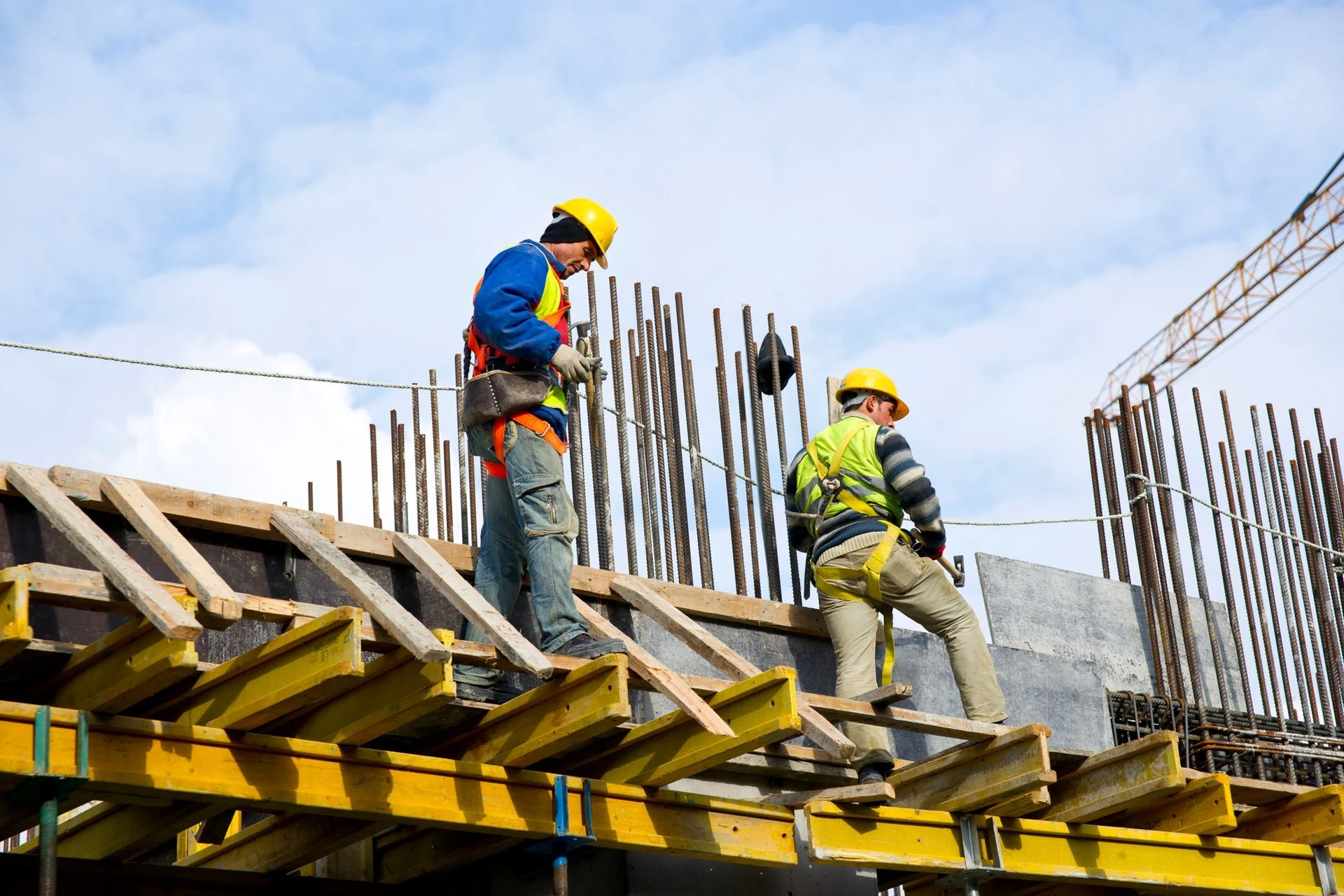
Construction sites present constantly changing hazards. Open edges, incomplete structures, changing elevations, and multiple trades working at the same time can all increase fall risk.
For this reason, fall protection equipment for construction often combines engineering controls with personal protective equipment.
Common examples include:
Full-body harnesses connected to approved anchors
Temporary horizontal lifelines
Self-retracting lifelines
Guardrail systems around open edges
Controlled access zones
Safety nets for large structural projects
Before work begins, employers should ensure workers receive proper instruction on equipment selection, inspection, fitting, use, and emergency rescue procedures. Even high-quality equipment cannot protect workers if it is used incorrectly.
GreenSpine Safety can support employers with safety training programs and site-specific workplace safety consulting to help workers understand how fall protection applies to their actual work environment.
Passive vs. Active Fall Protection
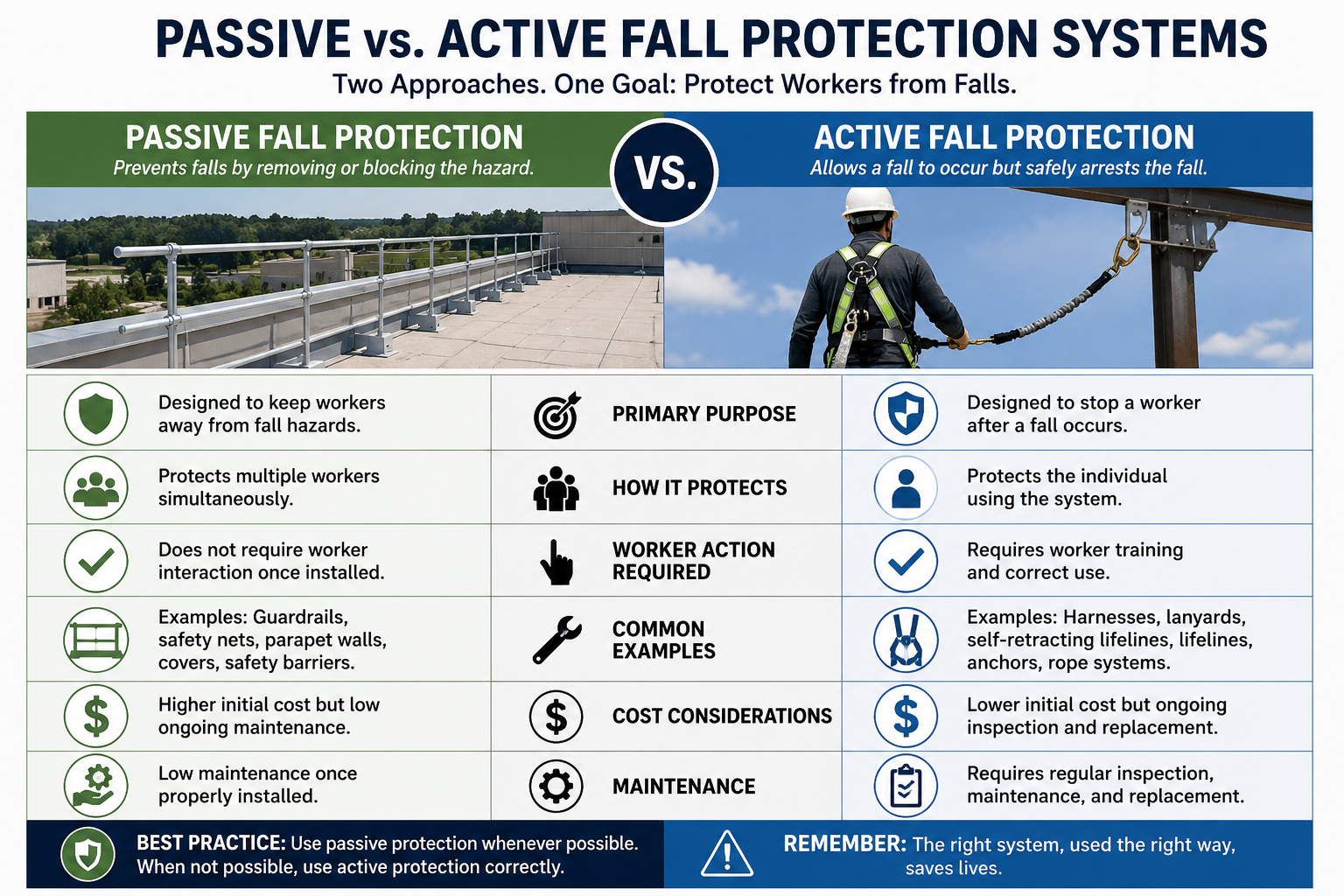
Not every fall hazard is controlled in the same way. Fall protection methods are generally divided into passive and active systems.
Whenever possible, employers should prioritize passive fall protection because it reduces reliance on worker behaviour and requires minimal user interaction. However, many construction, maintenance, and industrial tasks still require active fall protection because of the nature of the work.
What Is Passive Fall Protection?
Passive fall protection prevents workers from reaching a fall hazard without requiring them to wear or operate personal protective equipment. Once installed correctly, these systems provide continuous protection for everyone in the work area.
Common examples include:
Guardrail systems
Permanent handrails
Safety barriers
Hole covers
Safety nets
Parapet walls designed to meet safety standards
Passive systems are often preferred because they:
Protect multiple workers at the same time
Reduce the risk of human error
Require less daily user interaction
Provide continuous protection throughout the work shift
For example, installing guardrails around the perimeter of a rooftop can reduce or eliminate the need for each worker to connect to a personal fall arrest system while performing routine tasks near the edge.
What Is Active Fall Protection?
Active fall protection requires workers to actively use personal protective equipment and follow safe work procedures. These systems depend on proper equipment selection, correct fitting, worker training, and routine inspections.
Examples include:
Personal fall arrest systems
Travel restraint systems
Rope access systems
Work positioning systems
Vertical lifelines
Horizontal lifeline systems
Unlike passive protection, active systems require workers to remain connected to an approved anchor point whenever they are exposed to a fall hazard. Disconnecting, even briefly, can leave a worker completely unprotected.
Passive vs. Active Fall Protection Comparison
| Feature | Passive Fall Protection | Active Fall Protection |
|---|---|---|
| Primary purpose | Prevents workers from reaching a fall hazard. | Stops or limits a fall if one occurs. |
| Requires worker action | No. Once installed, the system protects the work area. | Yes. Workers must connect, adjust, and use the system correctly. |
| PPE required | Usually not. | Yes, such as harnesses, lanyards, and lifelines. |
| Training required | Minimal for day-to-day use. | More extensive training is required. |
| Examples | Guardrails, barriers, safety nets, and hole covers. | Harnesses, lanyards, lifelines, anchors, and rope grabs. |
| Risk of human error | Lower because protection does not depend on each worker connecting to equipment. | Higher if equipment is misused or workers disconnect while exposed to a hazard. |
| Best for | Permanent or repeated work areas where hazards can be physically controlled. | Dynamic construction, maintenance, and industrial work where workers need mobility. |
In many workplaces, the safest approach combines both passive and active systems. For example, a construction site may use guardrails around completed sections while workers installing steel beams rely on personal fall arrest systems.
Personal Fall Arrest Systems
A personal fall arrest system is designed to safely stop a worker during a fall before they strike a lower level or object.
Rather than preventing the fall altogether, the system limits the forces placed on the body and keeps the worker suspended until rescue can be performed.
A properly configured personal fall arrest system typically includes four primary components:
Full-body harness
Lanyard or self-retracting lifeline
Anchorage point
Connectors
Each component must be compatible with the others. Mixing incompatible equipment or using damaged components can compromise the effectiveness of the entire system.
Components of a Personal Fall Arrest System
1. Full-Body Harness
The fall protection harness is the foundation of a personal fall arrest system. Unlike older body belts, modern full-body harnesses distribute arrest forces across stronger areas of the body, including the shoulders, chest, pelvis, and upper thighs.
A properly fitted harness should:
Fit snugly without restricting movement
Sit comfortably on the shoulders
Have leg straps adjusted firmly
Position the dorsal D-ring between the shoulder blades
Allow workers to move freely while remaining secure
Common harness features include:
Back D-ring for fall arrest
Side D-rings for positioning work
Front attachment points for ladder climbing systems
Quick-connect buckles
Adjustable chest and leg straps
Padding for extended use
Workers should never modify a harness or use one that shows signs of wear, damage, or unauthorized repairs.
2. Lanyards
A lanyard connects the harness to an approved anchorage point. Several types of lanyards are available depending on the work being performed.
Shock-absorbing lanyards contain an energy absorber that deploys during a fall, reducing the forces transferred to the worker. These are common in roofing, structural steel work, construction, and general maintenance.
Twin-leg lanyards allow workers to maintain 100% tie-off while moving between anchor points. Instead of disconnecting completely, one leg remains attached while the second leg is repositioned.
Positioning lanyards are designed to hold workers in place while allowing them to work with both hands free. They are not intended to function as fall arrest devices unless specifically designed and approved for that purpose.
3. Anchorage Points
The anchor is one of the most important parts of any fall arrest system. Even the best harness cannot protect a worker if it is connected to an unsuitable anchor.
Anchors may include:
Permanent roof anchors
Structural steel members
Certified concrete anchors
Beam clamps
Horizontal lifeline systems
Engineered anchor devices
When selecting an anchor, employers should consider:
Required load capacity
Structural integrity
Swing fall hazards
Clearance below the worker
Ease of rescue
Manufacturer recommendations
Workers should never attach to guardrails not designed as anchors, scaffolding components unless approved, plumbing, electrical conduit, handrails, or temporary fixtures.
4. Connectors
Connectors link the components of the fall arrest system together.
Common connectors include:
Carabiners
Snap hooks
Rope grabs
D-rings
Swivels
Anchorage connectors
Only self-locking connectors designed for fall protection should be used. Connectors should be inspected for cracks, corrosion, bent gates, missing locking mechanisms, sharp edges, and excessive wear.
A connector that does not lock properly should be removed from service immediately.
Choosing the Right Fall Protection Equipment
Selecting fall protection equipment depends on more than the height of the work area. Employers should conduct a site-specific hazard assessment that evaluates the task, environment, equipment compatibility, and rescue requirements before work begins.
Key factors include:
Working height and fall distance
Type of work being performed
Frequency of movement
Available anchorage points
Environmental conditions such as wind, rain, or ice
Potential swing fall hazards
Required mobility for the worker
Rescue procedures in the event of a fall
For example, a worker performing roof maintenance may benefit from a self-retracting lifeline that allows greater freedom of movement, while a structural steel worker may require a twin-leg shock-absorbing lanyard to maintain continuous tie-off when moving between beams.
Choosing the right equipment, and ensuring every component is compatible, helps reduce risk and improve overall workplace safety.
How to Inspect Fall Protection Equipment
Regular inspection is one of the most important steps in preventing workplace injuries. Even high-quality equipment can become unsafe due to wear, damage, environmental exposure, or improper storage.
Every worker should inspect equipment before each use. Employers should also ensure documented inspections are completed by a competent person according to the manufacturer’s instructions and workplace procedures.
Inspection should never be treated as a quick visual glance. It involves carefully examining every component to verify that it remains safe, functional, and suitable for continued use.
The federal Canada Occupational Health and Safety Regulations also reference fall protection planning, including the need to consider manufacturer instructions related to storage, maintenance, inspection, and testing.
Step-by-Step Guide to Inspecting Fall Protection Equipment
Step 1: Review Inspection Records
Before using equipment, check:
Inspection tags
Inspection logs
Serial numbers
Manufacturer labels
Date of last formal inspection
If inspection records are missing or incomplete, the equipment should not be used until its condition has been verified.
Step 2: Inspect the Safety Harness
The fall protection harness should be examined from top to bottom.
Check the webbing for:
Cuts
Tears
Fraying
Burn marks
Abrasions
Chemical damage
UV deterioration
Broken fibres
Excessive dirt that may hide damage
Next, inspect the stitching for loose threads, broken stitching, pulled seams, missing stitches, or uneven stitching patterns.
Finally, examine the hardware, including D-rings, buckles, adjusters, grommets, and attachment points. Hardware should be free from rust, corrosion, sharp edges, cracks, bending, excessive wear, or deformation.
Any signs of damage require the harness to be removed from service immediately.
Step 3: Inspect Lanyards and Lifelines
Lanyards experience significant forces during normal use and especially during a fall.
Check for:
Frayed rope
Broken fibres
Chemical exposure
Heat damage
Cuts
Abrasion
Knots
Excessive stretching
For shock-absorbing lanyards, inspect the energy absorber. Do not use the lanyard if the shock pack has deployed, protective covers are torn, stitching has separated, or deployment indicators are visible.
For self-retracting lifelines:
Pull the cable out completely
Verify smooth retraction
Test the locking mechanism
Check the housing for cracks or damage
Ensure labels remain readable
If the braking mechanism fails to lock immediately, remove the device from service.
Step 4: Inspect Anchorage Devices
Anchor points must remain structurally sound.
Inspect roof anchors, beam clamps, concrete anchors, horizontal lifeline systems, and temporary anchor devices for cracks, loose fasteners, corrosion, distortion, missing components, or signs of impact damage.
Anchors should never be modified without manufacturer approval.
Step 5: Inspect Connectors
Every connector should operate smoothly.
Check carabiners, snap hooks, rope grabs, swivels, and locking gates. Verify that gates close automatically, locking mechanisms engage fully, components rotate properly when designed to do so, and no sharp edges are present.
Never force a connector to close or lock.
Step 6: Remove Unsafe Equipment from Service
If any component fails inspection:
Tag it as “Do Not Use”
Remove it from the work area
Notify the supervisor
Record the defect
Replace the equipment before work resumes
Workers should never attempt to repair fall protection equipment unless specifically authorized by the manufacturer.
Fall Protection Equipment Inspection Checklist
| Inspection Item | Check |
|---|---|
| Manufacturer labels are present and legible. | ☐ |
| Harness webbing has no cuts, fraying, burns, or chemical damage. | ☐ |
| Stitching is intact with no loose or broken threads. | ☐ |
| D-rings, buckles, and hardware are free from cracks and corrosion. | ☐ |
| Lanyards show no signs of wear, knots, or stretching. | ☐ |
| Shock absorber has not deployed. | ☐ |
| Self-retracting lifeline locks and retracts properly. | ☐ |
| Connectors lock securely. | ☐ |
| Anchor device shows no visible damage. | ☐ |
| Equipment has passed required formal inspections. | ☐ |
Completing this checklist takes only a few minutes but can significantly reduce the risk of equipment failure.
Common Inspection Mistakes
Even experienced workers can overlook important defects when inspections become routine or rushed.
Common mistakes include:
Only inspecting visible areas
Ignoring small cuts or fraying
Failing to read manufacturer instructions
Using equipment after a fall
Missing inspection documentation
Forgetting environmental damage
Damage often occurs in folded webbing, inside shock absorbers, or beneath hardware. Inspect the entire piece of equipment, not just the sections that are easiest to see.
Small cuts, loose stitching, or frayed fibres should never be dismissed as cosmetic. Exposure to sunlight, chemicals, welding sparks, paint, moisture, or extreme temperatures can also weaken materials over time, even if no obvious damage is visible.
How Often Should Fall Protection Equipment Be Inspected?
Inspection frequency depends on how often the equipment is used and the conditions in which it operates.
At minimum:
Before every use: Workers should complete a visual and tactile inspection.
Periodically: A competent person should conduct documented inspections at intervals recommended by the manufacturer and required by workplace procedures.
After any incident: Equipment exposed to a fall, impact, or suspected overload must be removed from service immediately until evaluated.
Following prolonged storage: Equipment should be inspected before being returned to service.
Organizations operating in harsh environments, such as construction sites, marine facilities, or chemical plants, may need more frequent inspections due to increased exposure to wear and environmental damage.
Storage and Maintenance
Proper storage and maintenance help extend the service life of fall protection equipment and keep it reliable when needed.
Always follow the manufacturer’s care instructions. As a general rule:
Store equipment in a clean, dry location
Protect it from direct sunlight and UV exposure
Keep it away from chemicals, oils, solvents, and corrosive substances
Avoid placing heavy objects on top of harnesses or lifelines
Never store wet equipment without allowing it to dry naturally
Do not expose equipment to excessive heat or open flames
Clean webbing using mild soap and water unless otherwise specified by the manufacturer
Avoid unauthorized repairs or modifications. If a component is damaged or no longer meets inspection requirements, replace it rather than attempting to fix it.
Recommended Maintenance Schedule
| Maintenance Task | Recommended Frequency |
|---|---|
| User pre-use inspection | Before every use. |
| Cleaning harnesses and lanyards | As needed or after heavy contamination. |
| Formal documented inspection by a competent person | According to manufacturer recommendations and workplace procedures. |
| Check storage conditions | Monthly. |
| Review inspection records | Monthly. |
| Remove equipment after a fall event | Immediately. |
| Replace damaged or expired equipment | As soon as defects are identified. |
A proactive maintenance program supports compliance and helps reduce equipment failures, unexpected downtime, and replacement costs.
Employer Responsibilities for Fall Protection Equipment
Employers play a critical role in creating safe workplaces where employees can work at heights without unnecessary risk. Providing fall protection equipment is only one part of the responsibility. Employers must also ensure that equipment is appropriate, maintained, inspected, and supported by safe work procedures.
A strong fall protection program should include:
Hazard identification and risk assessments
Selection of suitable fall protection systems
Worker training and competency verification
Regular equipment inspections
Emergency rescue planning
Documentation and record keeping
Employers should never assume that providing a harness and lanyard automatically creates a safe work environment. Workers must understand how to use the equipment correctly, recognize hazards, and respond during emergencies.
For businesses operating in British Columbia, employers should consult WorkSafeBC’s Fall Protection OHS Regulation and related fall protection guidance when developing workplace procedures. WorkSafeBC also provides an introductory guide to personal fall protection equipment for BC workplaces.
GreenSpine Safety can help employers review their existing program, identify gaps, and develop practical documentation through its British Columbia workplace safety program services and health and safety consulting services.
Worker Responsibilities When Using Fall Protection Equipment
Workers also have an important role in maintaining workplace safety. Even the most advanced fall arrest system cannot protect someone who does not use it correctly.
Workers should:
Inspect equipment before every use
Wear the correct size and type of harness
Follow safe work procedures
Connect only to approved anchor points
Report damaged equipment immediately
Participate in required training
Understand rescue procedures
Workers should never:
Use equipment that has failed inspection
Modify or repair equipment without approval
Disconnect from a fall protection system while exposed to a hazard
Use equipment for purposes other than its intended design
Proper communication between employers and workers helps identify hazards early and prevent avoidable incidents.
FAQs About Fall Protection Equipment
1. What is fall protection equipment?
Fall protection equipment refers to safety devices and systems designed to prevent falls or safely stop a worker after a fall occurs. This may include harnesses, lanyards, anchors, lifelines, guardrails, and other protective systems.
The type of equipment required depends on the work environment, hazard level, and whether the goal is to prevent a fall or arrest one safely.
2. How often should fall protection equipment be inspected?
Workers should inspect their equipment before every use. Formal inspections should also be completed by a competent person according to manufacturer recommendations and workplace safety requirements.
Equipment must also be inspected immediately after a fall event or whenever damage is suspected.
3. What is the difference between a fall arrest system and a fall restraint system?
A fall restraint system prevents workers from reaching a fall hazard by limiting their movement. A fall arrest system allows a fall to occur but safely stops the worker before they reach a lower surface.
For example, a restraint system may prevent a worker from reaching the edge of a roof, while a fall arrest system may stop a worker after falling from that roof.
4. How long does fall protection equipment last?
The lifespan of fall protection equipment depends on frequency of use, storage conditions, exposure to chemicals or weather, maintenance practices, and manufacturer recommendations.
Equipment should not be used based only on age. Regular inspections determine whether equipment remains safe for use.
5. Can a safety harness be reused after a fall?
A safety harness involved in a fall arrest event should be removed from service immediately. Even if damage is not visible, the equipment may have experienced forces that affect its strength and performance.
The equipment should only return to service if evaluated according to manufacturer procedures and approved by a qualified person.
6. What fall protection equipment is required for construction workers?
The required equipment depends on the task and workplace conditions. Common construction fall protection equipment includes full-body harnesses, shock-absorbing lanyards, self-retracting lifelines, approved anchor systems, horizontal lifelines, and guardrail systems.
Construction employers should complete a hazard assessment before selecting equipment.
7. Why is inspecting fall protection equipment important?
Inspection helps identify damage that could cause equipment failure during a fall. Common issues include frayed webbing, damaged stitching, corroded hardware, faulty connectors, and deployed shock absorbers.
Routine inspections protect workers and support compliance with workplace safety requirements.
Conclusion: Choosing the Right Fall Protection Equipment Protects Workers
Working at heights carries serious risks, but the right safety systems can significantly reduce the chance of severe injuries and fatalities.
Fall protection equipment is a critical part of workplace safety, but its effectiveness depends on proper selection, regular inspection, correct use, and ongoing maintenance. From safety harnesses and lanyards to anchors and complete fall arrest systems, every component must work together to provide reliable protection.
Employers must provide appropriate equipment, training, and procedures. Workers must inspect and use equipment correctly every time.
A proactive approach to fall protection does more than support compliance. It creates a workplace where employees can do their jobs with greater confidence and less risk.
If your organization needs help developing or improving a fall protection program, GreenSpine Safety can support you with safety solutions, training programs, and workplace safety resources.
Contact GreenSpine Safety today to strengthen your fall protection program and create a safer workplace.
About the Author: Dan McMillan
Dan McMillan is the President of Greenspine Safety Solutions, an Indigenous-owned health and safety consulting company based in British Columbia. Dan brings real-world experience in safety leadership, forestry-sector safety, field-level safety support, advanced first aid, safety program development, workplace training, compliance support, and practical safety system improvement.
Through Greenspine Safety Solutions and Greenspine Academy, Dan helps employers across Vancouver Island, British Columbia, Alberta, and Western Canada build safer, clearer, and more practical workplace safety systems.